
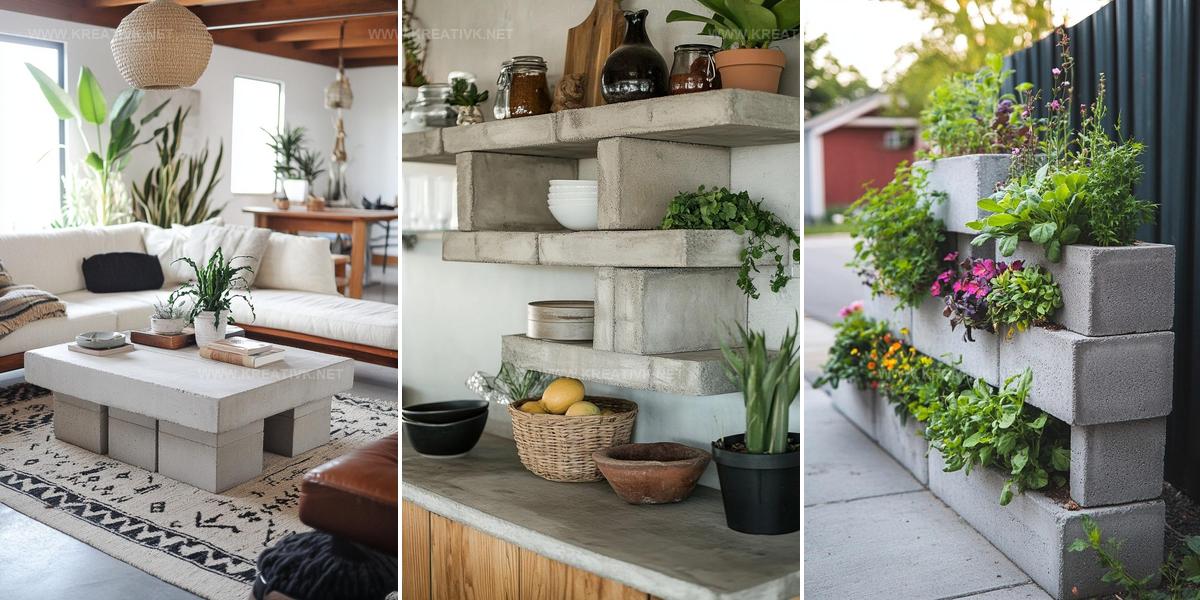
13 Cinder Block Furniture Ideas That Look Amazing
Cinder block furniture has become a surprisingly stylish and budget-friendly way to furnish living spaces with an industrial edge that feels both modern and timeless.
What once seemed like simple construction materials now serves as the foundation for coffee tables, shelving units, outdoor seating, and even bed frames that add character to any room.
The beauty of working with concrete blocks lies in how accessible and affordable they are, making it possible for you to achieve a custom look without spending a fortune or needing advanced carpentry skills.
These sturdy units can support heavy loads while maintaining clean lines and geometric shapes that complement minimalist and contemporary design aesthetics.
Whether painted in bold colors or left in their natural gray state, they offer flexibility that adapts to different decorating visions and personal preferences.
The combination of concrete blocks with wood planks, cushions, or glass creates contrast that feels intentional and thoughtfully designed rather than makeshift.
Building with these materials opens up creative freedom while proving that functional design doesn't require expensive furniture stores or complicated assembly instructions.
Gray Cinder Block Outdoor Paths
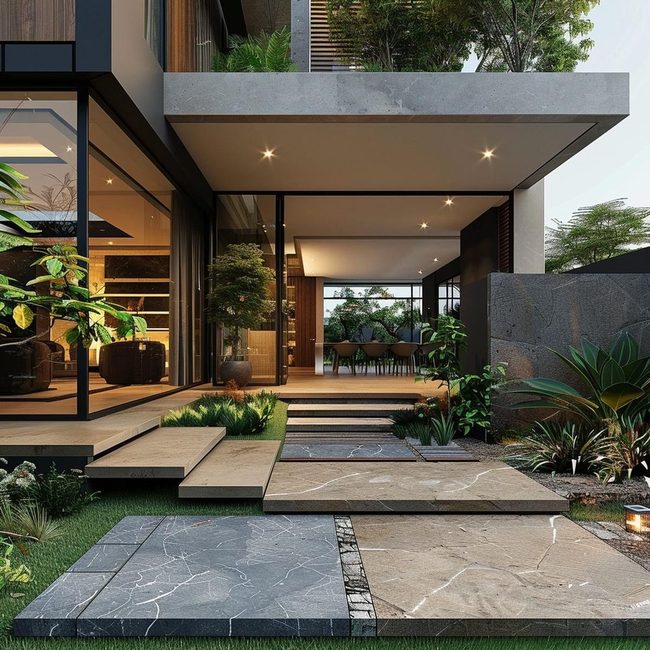
Cinder blocks offer a fantastic way to build stepping stones that look great and serve a real purpose in your garden space, whether you paint them in bold colors or decorate them with mosaic tiles for an artistic garden path.
Once you've decided on your layout and marked out where every block will sit with stakes or chalk, clear away any grass, rocks, or debris and make sure the ground is level so everything sits evenly.
You can lay the blocks flat for a traditional look or stand them on their sides for something more modern and textured.
For extra security and to prevent shifting over time, landscape adhesive or burying them slightly into the ground works well.
Cinder block stepping stones hold up incredibly well against weather and heavy foot traffic, so they're perfect if you want something that lasts.
Best of all, you can rearrange them whenever you feel like changing your garden's layout without any fuss.
Measuring your space first and planning your path design saves you time and helps everything line up nicely.
Starting with the ground prep and working through to placement makes the whole project straightforward and rewarding.
Gray Cinder Block Wine Options
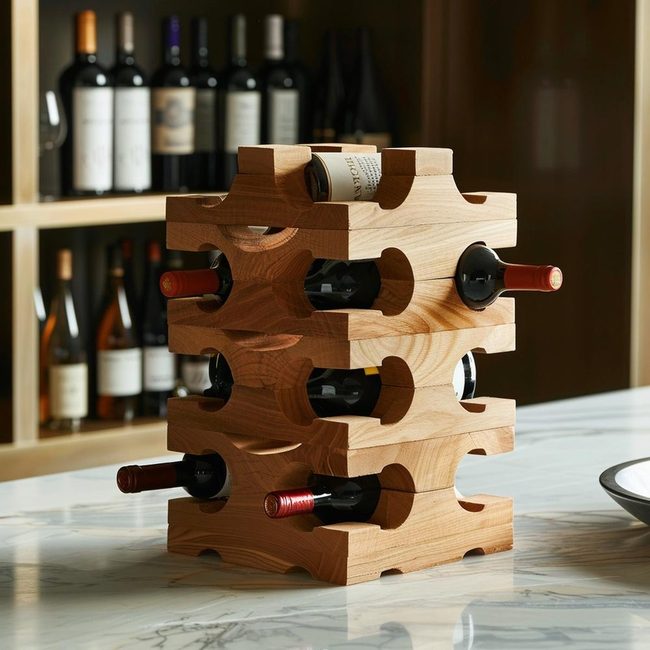
Cinder blocks with open slots stacked into a pyramid or tower a striking wine storage display that looks far more refined than you'd expect from such a humble material.
You can arrange these blocks in whatever pattern fits your space, whether that's a large pyramid for an extensive collection or a simple vertical stack for a smaller one.
Every slot holds one or two bottles depending on the block size, so you may know right away how much capacity you have.
Stability matters, so make sure everything is properly aligned and secure, use adhesive if you're building something tall to prevent wobbling.
Paint the blocks or wrap them in decorative contact paper to polish up the look, and consider setting the whole rack on a wooden or metal base that lifts it off the floor and adds another design element.
Positioning bottles horizontally in those slots keeps the corks moist and helps preserve your wine's quality over time.
Whether you place this in your kitchen, dining room, or home bar, you get something that's both functional and budget-friendly.
Best of all, expanding it is simple whenever your collection grows.
Gray Block Plank Organization
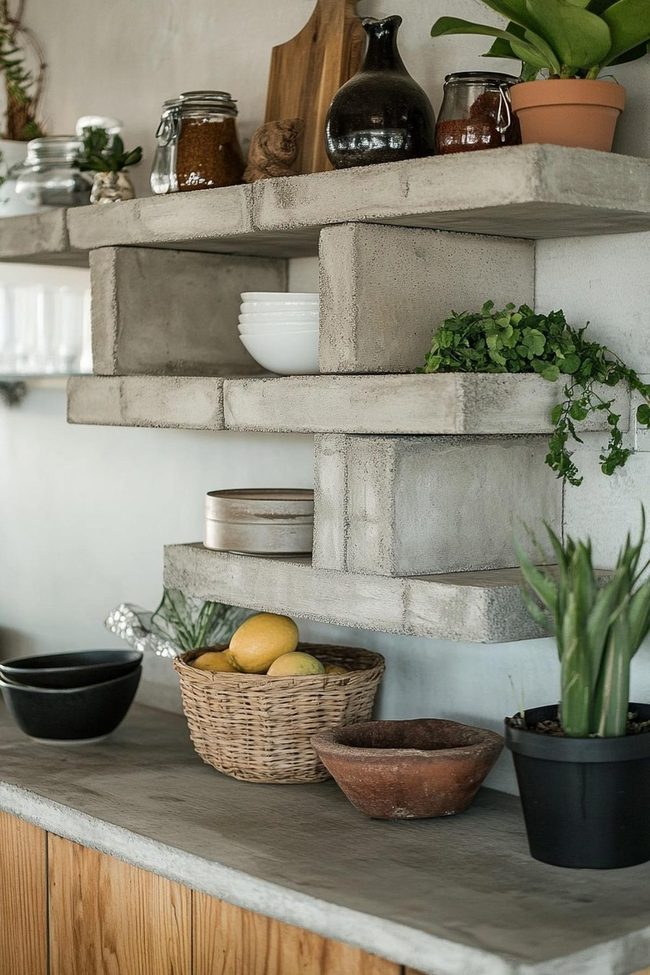
Stacked cinder blocks and wooden planks form a storage solution that works in your living room, bedroom, or garage, and you can customize the height and width to suit whatever space you're working with.
Building one is straightforward, just place two blocks on the floor as your foundation, set a wooden plank across the top so it sits level, and stack additional blocks and planks upward as high as you need.
If you want extra security, adhesive between the blocks and planks keeps everything locked in place, though it's not required for basic stability.
Those hollow slots built into the cinder blocks aren't just structural, you can use them to tuck away baskets, books, or small plants and boost the shelf's appearance at the same time.
Since this design is so flexible, you can adjust it whenever your needs change and even take it apart and rebuild it in a different configuration if you relocate or want a fresh arrangement.
Everyone needs extra storage, and this simple system delivers solid functionality without fuss or complicated assembly.
Gray Cinder Blocks Stacked Options
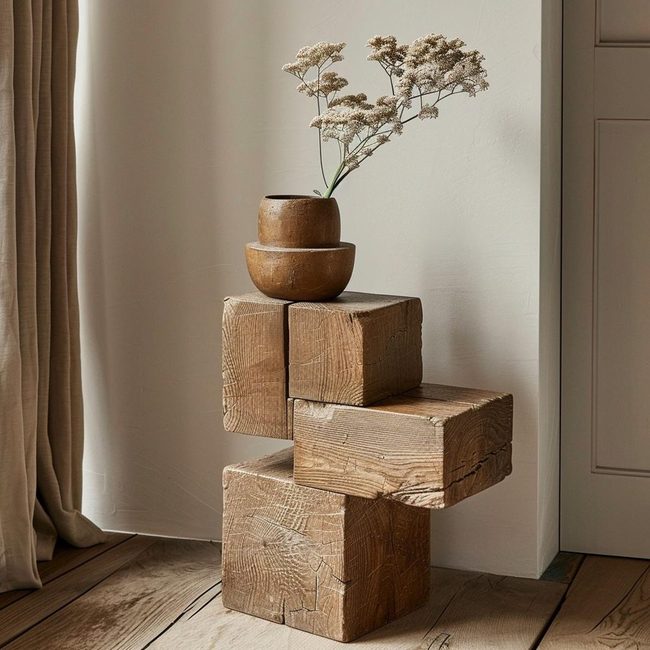
Stacked cinder blocks make a surprisingly chic side table that combines function with style, and you can build one in just a few simple steps.
Start by gathering 2–4 cinder blocks depending on your desired height, then stack them straight on top of eachother and ensure they stay level and secure.
If you want a natural modern look, keep the blocks in their original gray finish, or paint them to match your room's color scheme for something more personalized.
Place a small piece of wood or glass on top to add a smooth, polished surface that's better for holding lamps, books, and drinks.
Those open slots built into the blocks offer unexpected storage space where you can tuck small baskets, magazines, candles, or plants and keep things organized and accessible.
Construction adhesive can hold everything together, though you may not need it if the stack feels solid and sturdy.
Since cinder blocks are incredibly durable, your side table will stand up to daily use without any problems.
Best of all, moving it around is effortless whenever you want to rearrange your room's layout.
Gray Block Oak Beam Seating
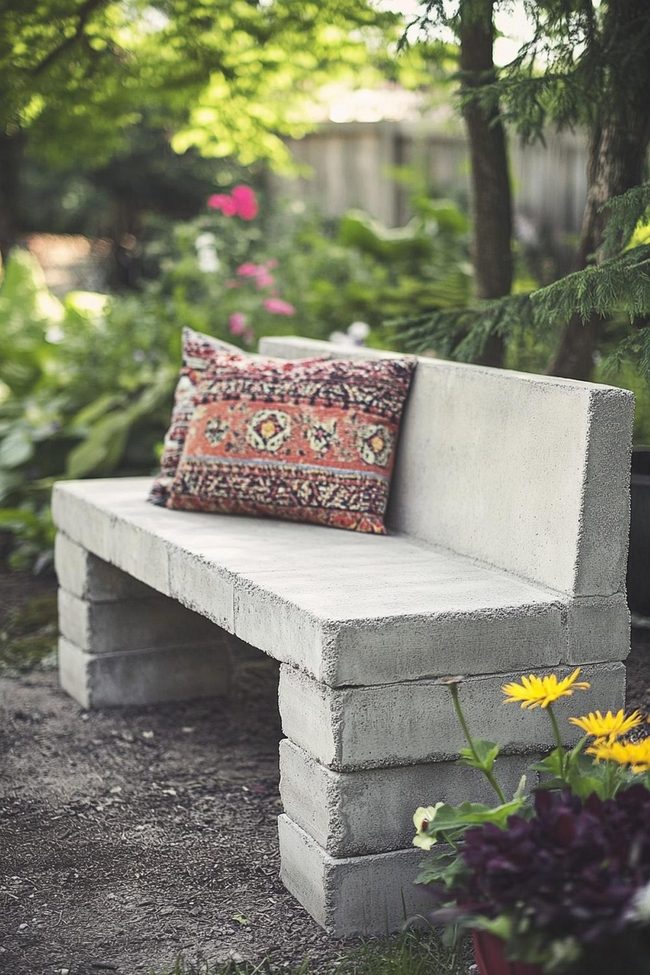
Building an exterior cinder block bench gives you a sturdy seating solution that handles any weather condition and costs far less than store-bought alternatives, making it perfect for patios, gardens, or fire pit areas where you can entertain people or simply relax.
Stack at least 12 cinder blocks into two columns about 4–5 blocks high to form solid bases on across side, then secure them with construction adhesive for extra stability.
Slide wooden beams through the holes in the cinder blocks, using three beams to establish a balanced and comfortable seat with enough overhang for proper seating space.
Sand and stain the beams or apply weatherproof paint to give your bench a polished appearance that complements your exterior space.
Customize further by painting the cinder blocks themselves or filling the open slots with potted plants to add greenery and visual interest to your seating area.
Top everything off with exterior cushions or bench pads so you get real comfort alongside the durability and style.
Your new bench handles heavy use during backyard gatherings and family cookouts without any issues, and the modular design means you can adjust dimensions or aesthetics to match your exterior setup perfectly.
Cinder Block Play Table For Kids
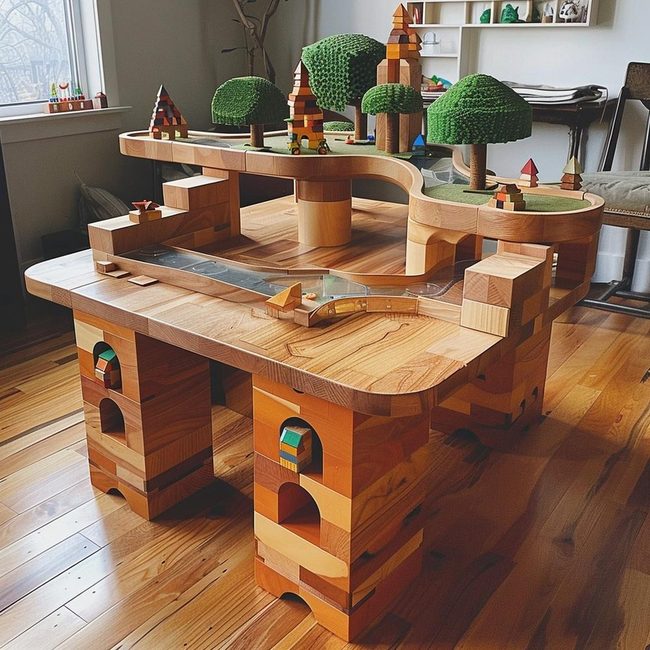
That DIY cinder block play table stands out as one of the smartest solutions for parents dealing with kids who constantly outgrow their furniture, and you are able to love how sturdy and affordable this project turns out to be.
Start by stacking two groups of cinder blocks two to three blocks high to form your legs, then top them with a piece of plywood or a salvaged wooden board that gives you plenty of room for play without being too heavy to move.
Sand down the wood edges so splinters don't pose a problem, and painting or sealing the surface adds durability that stands up to years of use.
Once you've placed the tabletop on the blocks, you can secure it with construction adhesive if you want extra stability, though many people skip this step without issues.
Now for the part kids really enjoy, let them help you paint the cinder blocks in light-filled colors or decorate them with stickers and stencils to make the table feel like theirs.
Tuck storage bins and baskets into the open holes of the blocks to keep toys, art supplies, and books organized and within reach.
Whether your children are building with LEGOs, playing pretend, or doing art projects, this table handles it all, and when they eventually outgrow it, you simply disassemble the blocks and repurpose them for something else entirely.
Gray Blocks Hold Living Plants
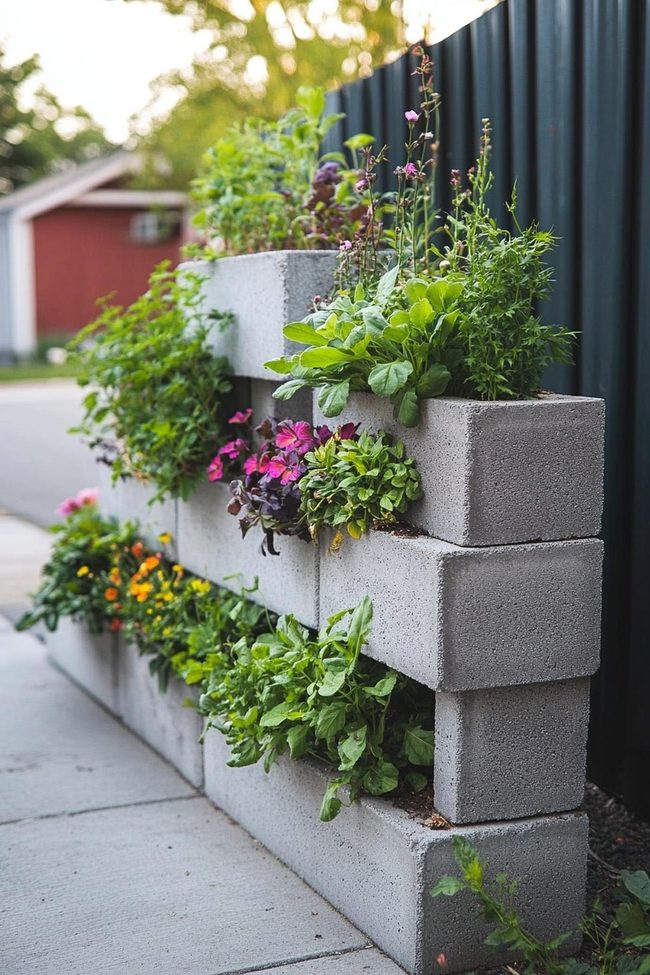
Cinder block planters offer an affordable and striking way to display your plants while bringing a modern, industrial edge to any space indoors or out.
Start by deciding how many blocks you need and arranging them however you like, a straight line, pyramid shape, or staggered wall all work beautifully depending on what fits your area.
Open-slot cinder blocks are ideal since they naturally hold plants in in all cavity.
Paint the blocks in bold colors or diffused pastels to match your style and add personality to your setup.
Before planting, line the interior holes with landscaping fabric or plastic so soil won't leak through the bottom.
Fill in all slot with soil and leave room at the top for your plants.
Gray Block Outdoor Cooking Station
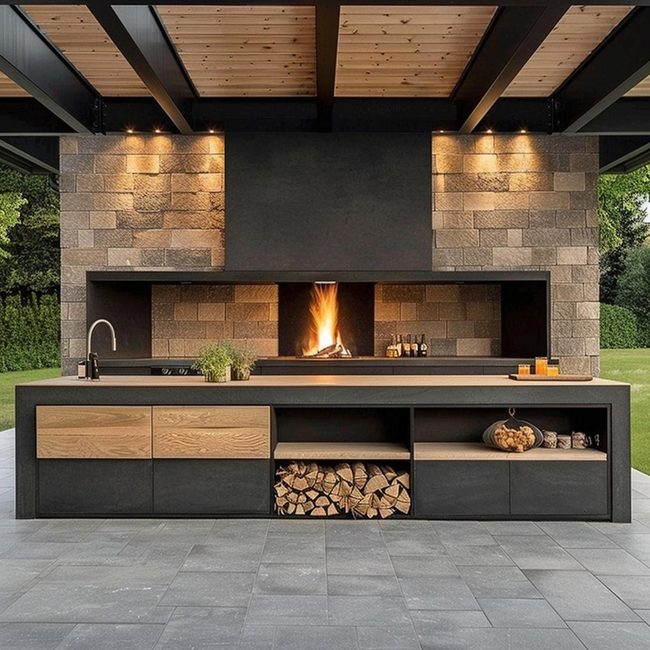
Building a cinder block outdoor kitchen puts a striking industrial structure right in your backyard that you can customize completely to suit how you cook and entertain.
Start by sketching out where your grill or stovetop will go, where you can prep food, and where you want storage, then stack weathered blocks into sturdy platforms that anchor your whole cooking setup.
Your prep surface deserves a durable top like granite, stainless steel, or sealed wood placed over the block base so you have a solid spot for chopping and mixing.
Those empty cavities running through cinder blocks make smart built-in storage, just slide baskets inside to hold your utensils and tools, and you can mount hooks or rods to hang pots and towels right on the sides.
Add shelves or a backsplash using more blocks to expand your storage and define different zones, and then decide whether to paint or seal them for a finished appearance or leave them bare for that raw, industrial character.
The whole structure is tough enough to handle weather year after year, making it a solid investment for anyone who loves hosting backyard barbecues and outdoor meals.
You get a project that's budget-friendly and built exactly how you want it, without sacrificing quality or durability.
This kind of setup reshapes an ordinary patio into a functional outdoor cooking space that actually holds up to real use.
Gray Cinder Block Home Bar
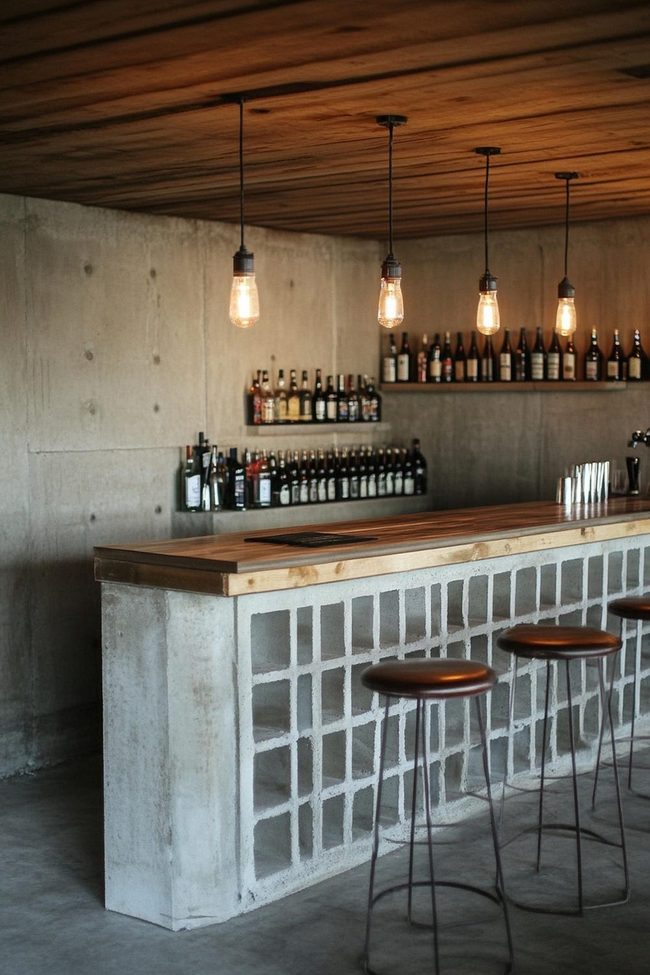
If you're dreaming of a home bar but don't want to splurge on expensive furniture, cinder blocks are here to save the day, and this DIY project is not only affordable but also endlessly customizable to fit your space and style.
Start by stacking cinder blocks 3–4 high to achieve standard bar height, making sure to align them thoughtfully and use construction adhesive if you want the bar to be permanent.
Next, choose a countertop material like a wooden plank, butcher block, or smooth laminate that's long enough to span the distance between your two cinder block columns with a little extra overhang on across side for both style and functionality.
Secure the countertop to the cinder blocks with adhesive or brackets to keep everything firmly in place.
Paint the cinder blocks in a color that matches your decor, or leave them raw for an industrial look that stands out visually.
You can also use the open slots in the blocks for storage by sliding in wine bottles, bar tools, or baskets to keep everything organized.
String lights or a decorative backsplash behind the bar adds warmth and character to your space.
Your DIY cinder block home bar works perfectly for entertaining or enjoying a quiet drink at home, and it's sturdy, stylish, and completely unique since no one else will have a bar quite like yours.
Industrial Gray Cinder Block Table
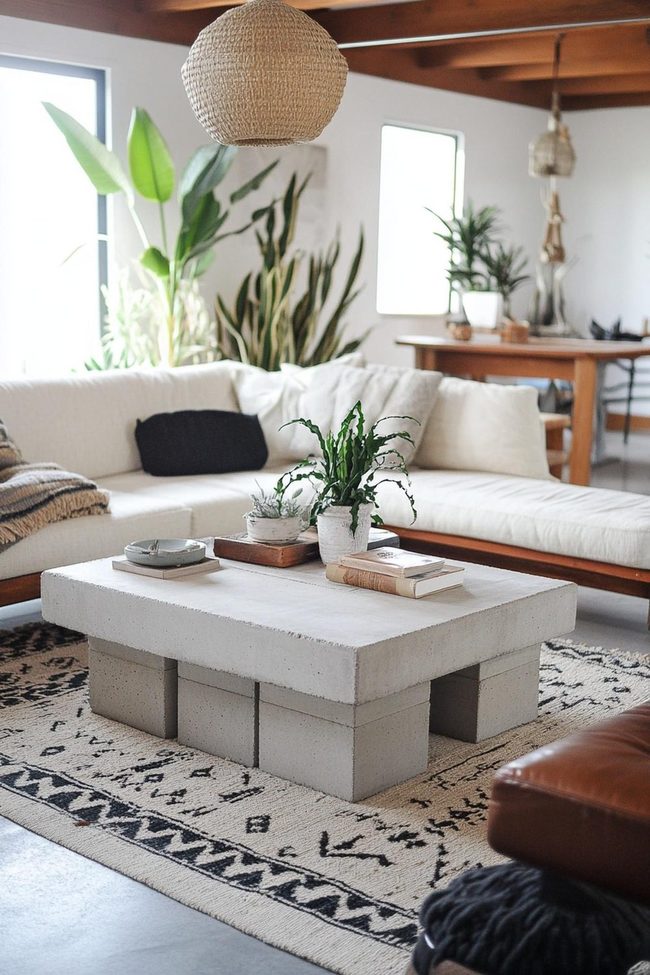
Building a coffee table from cinder blocks gives you a striking industrial centerpiece that works in almost any living space, and the best part is how simple the whole process becomes once you gather your materials.
You will only need cinder blocks, a wooden or glass surface for the top, and whatever creative touches appeal to you, so start by arranging four or six blocks into a rectangular or square foundation based on the dimensions you want.
Stack one or two layers of blocks if you prefer a taller table, but make sure everything feels solid and won't wobble when you set down your drinks and snacks.
For an authentic industrial look, leave those blocks as they are, though you could also paint them white, black, or in softer pastel tones if you want to match your existing decor and add a modern edge.
Wood works beautifully on top for a rustic atmosphere, and glass gives you a clean contemporary appearance, so just secure whichever material you pick with adhesive or simply rest it on the blocks if it feels stable.
Sand and stain any wood before assembly to keep the surface smooth and splinter-free for daily use.
One clever advantage of this design is that the open spaces inside those cinder blocks become instant storage for books, magazines, or small potted plants, which means you're maximizing every inch of furniture you build.
Gray Cinder Block Island Options
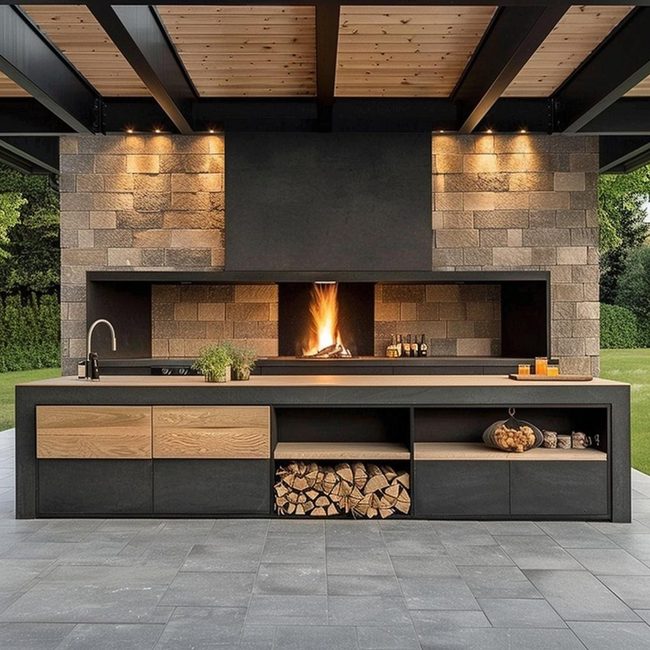
Across cinder block kitchen island makes a striking visual statement in any kitchen while solving the problem of needing more counter space without breaking the bank.
Building one is straightforward and lets you customize everything to match your space and style.
Start by measuring where you want the island to sit, then gather enough cinder blocks to form a sturdy base with at least two stacks for legs positioned far apart to support your tabletop.
Stack the blocks to your preferred height, ensuring they're level and stable throughout.
You can leave the blocks bare for an industrial vibe or paint them in colors that coordinate with your kitchen design.
For the top surface, wood, butcher block, or granite all work well depending on what fits your budget and taste.
Glue the tabletop securely to the cinder block foundation so it stays put.
Those hollow spaces in the blocks become bonus storage when you slide baskets inside to hold cooking tools, recipe books, or dry goods.
Hooks and rods attached to the block sides give you spots to hang kitchen towels or cookware
Cinder blocks hold up beautifully year after year through regular cooking and hosting, making this a durable addition that people always ask about when they see it in your kitchen.
Gray Block Seating With Cushions
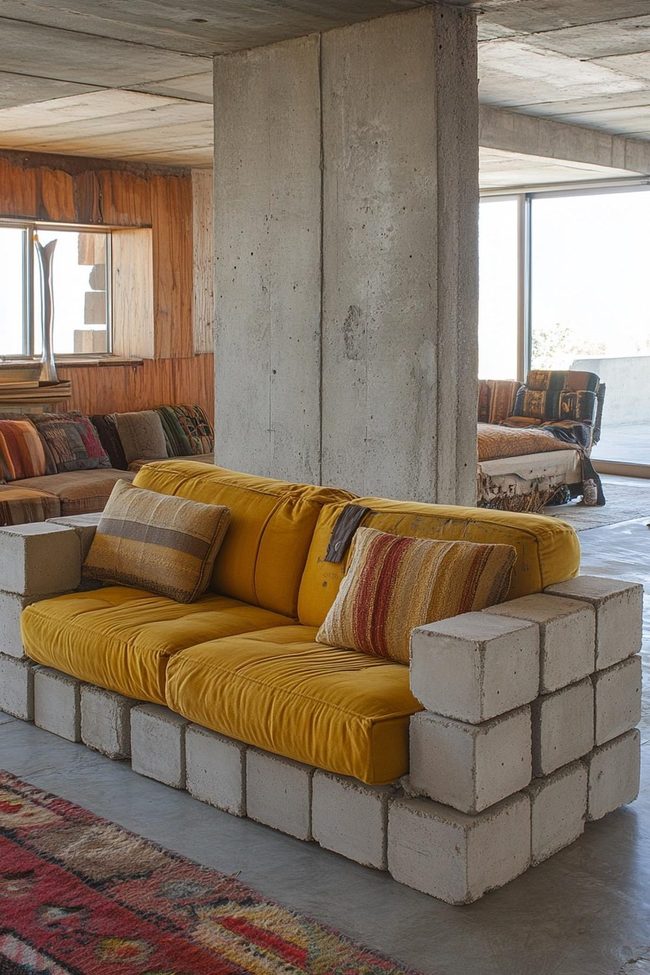
Building a cinder block couch gives you one of the most striking and functional pieces for any living room, patio, or backyard corner, and the industrial look of stacked cinder blocks brings a trendy, minimalistic edge that catches attention right away.
You are able to start by gathering enough cinder blocks to support seating weight along with sturdy wooden planks, then arrange the blocks in two parallel rows with space between them to hold your planks.
Stack the blocks to your preferred height, most people use two to three blocks per column, though you can adjust based on what feels right for you.
Once your base is solid, slide the wooden planks into the block slots to form the seat, making sure they fit snugly so nothing wobbles, and sanding and staining the wood beforehand gives everything a more polished finish.
Here's where it gets fun: thick, comfy cushions or an old mattress topper transform the seat into something welcoming, and you can cover them with fabric that matches your style, light-filled prints for playful energy or neutral tones for something modern and understated.
Throw pillows add both comfort and personality to round out the design.
Beyond the style factor, this couch is incredibly budget-friendly and tough enough to handle exterior weather where traditional furniture would struggle, so it's a smart investment for any space that needs durability and character.
Gray Blocks Open-Air Seating
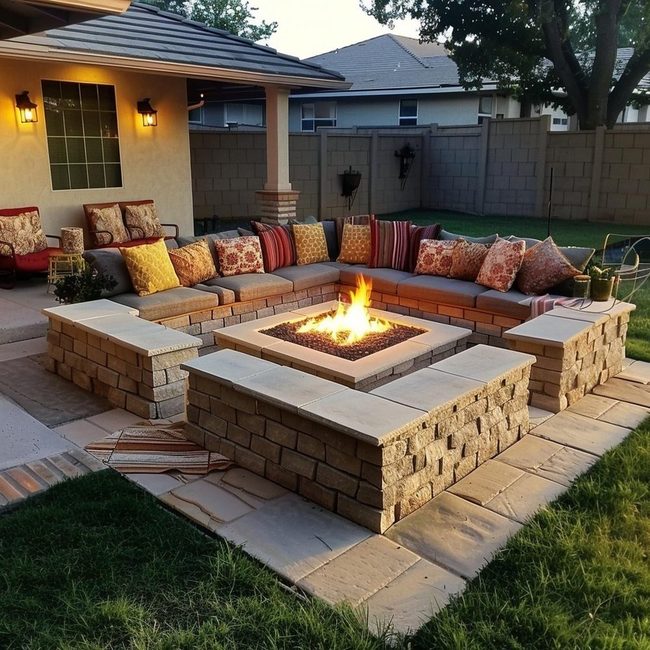
Stacked cinder blocks bold, geometric seating that frames your fire pit with striking industrial appeal, and this DIY project works well for anyone wanting durable yard seating without spending much money.
You can need eight to ten blocks per seat, arranged in two rows and stacked two to three blocks high depending on your preferred height.
Construction adhesive holds the blocks firmly in place and ensures your seating stays permanent and stable.
Once the base is set, cut wooden planks to span the top of every block section and sand them smooth to prevent splinters.
Those open block slots serve as useful for everyday living storage for firewood, blankets, or potted plants and keep your gathering space organized and functional.
The combination of industrial cinder blocks with warm firelight and natural wood s an appealing yard environment that's perfect for gathering around with people you care about.
Ava Jensen
Founder & Chief Creative Officer
Expertise
Holistic Interior Design Approach, Space Planning & Functional Layouts, Sustainable Design Practices, Digital Fabrication & Innovative Technologies, Residential & Commercial Project Management, Integration of Traditional and Modern Design Principles, Studio-Based Creative Problem Solving
Education
Westphal College of Media Arts & Design
Ava Jensen is the heart of kreativk.net. Based in Philadelphia, she combines classic and modern design methods to create spaces that are both beautiful and practical.
Trained at Westphal College of Media Arts & Design, Ava focuses on building sustainable homes and offices using smart, digital tools. She enjoys working with eco-friendly brands and loves sharing her knowledge with new designers.